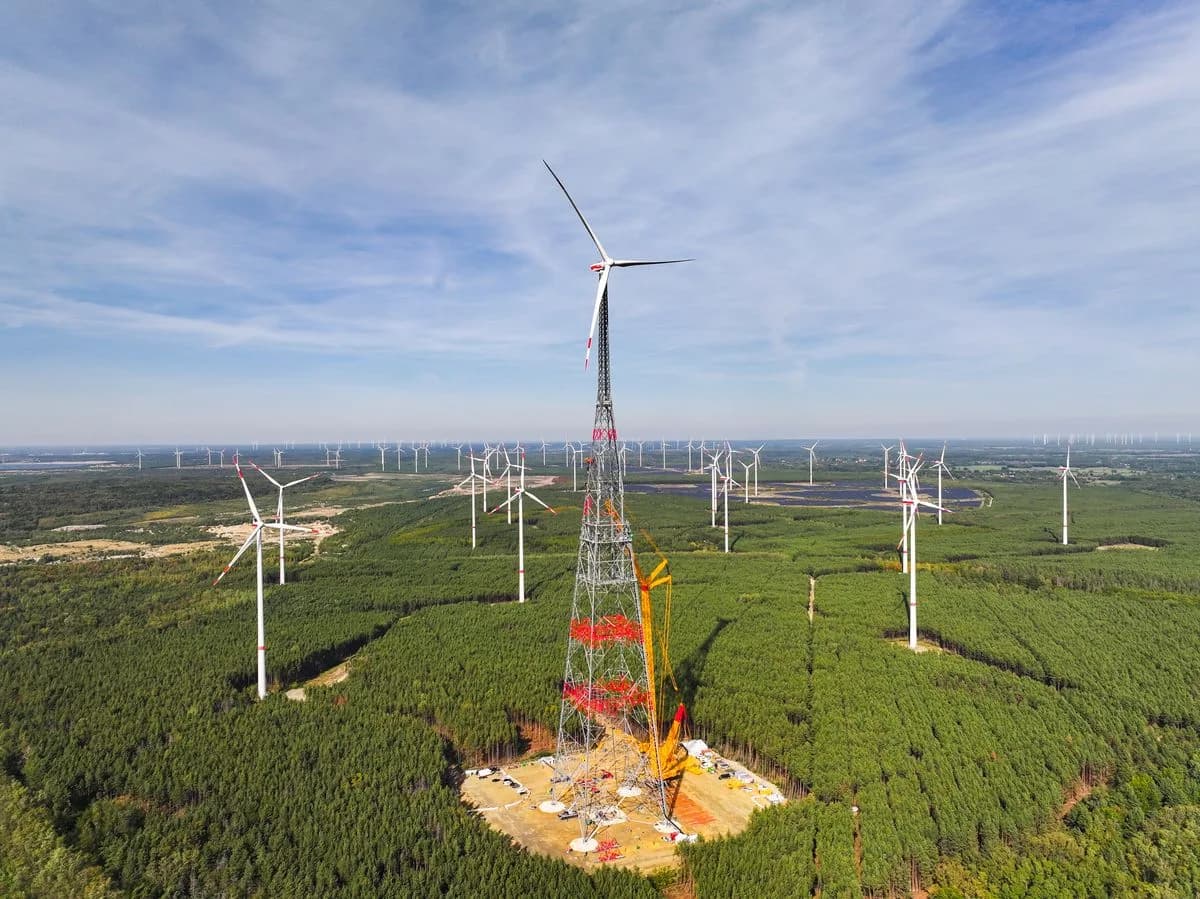
Germany's power market has spent much of this autumn waiting for the wind to return. That wait is over. Over the first three weeks of November 2026, wind generation surged from less than 100 gigawatt hours to more than 1,100 gigawatt hours, lifting wind's share of total electricity production from just 6 percent to 65 percent, according to data from Germany's federal network agency, the Bundesnetzagentur.
As turbines across Germany spun back to life, coal and gas-fired generators rapidly surrendered market share, triggering one of the sharpest shifts in the country's generation mix this year. The swing shows how quickly fossil fuel demand can retreat when renewable output arrives at scale.
From wind drought to surplus
The first half of November showed Germany's dependence on weather conditions. Between 8 and 10 November, wind generation averaged under 92 gigawatt hours and supplied less than 10 percent of total power output. During that period, fossil fuel generation climbed above 800 gigawatt hours a day and peaked at more than 910 gigawatt hours on 10 November.
Gas plants carried much of the burden, generating nearly 418 gigawatt hours on 10 November alone, while output from lignite plants exceeded 316 gigawatt hours and hard coal generation approached 130 gigawatt hours.
The picture changed within days. By 13 November, total wind output had climbed above 790 gigawatt hours. Two days later it reached nearly 736 gigawatt hours and supplied 56 percent of all electricity generation. On 18 November, wind production exceeded 1,100 gigawatt hours and accounted for almost two-thirds of total generation. Clean electricity output climbed in step, reaching more than 1.3 terawatt hours on 18 November, the highest level in the period.
Coal takes the biggest hit
The largest casualty of the wind rebound was coal generation. Hard coal output fell from more than 136 gigawatt hours on 11 November to just 43 gigawatt hours by 15 November. Lignite generation dropped from over 316 gigawatt hours on 10 November to below 149 gigawatt hours by 18 November.
As wind production rises, coal is increasingly the first major source of supply to be displaced. Germany's coal fleet remains crucial during periods of weak renewable generation, but the latest data show how quickly those plants can move from indispensable suppliers to secondary contributors when wind conditions improve.
Gas remains the shock absorber
Natural gas generation also retreated sharply as wind output climbed. Gas-fired production fell from more than 417 gigawatt hours on 10 November to just 106 gigawatt hours on 15 November, a decline of roughly three quarters in just five days.
Gas continues to serve a distinctive role within the system. Gas units can ramp up and down far faster than coal plants, making them well suited to filling supply gaps when wind production fades and stepping back when renewable output surges. The latest swings show that flexibility has become one of the most valuable attributes in Europe's power market.
Power forecasters at LSEG are currently calling for German wind power generation to remain close to or above the long-term average for the next several weeks, a sharp turnaround from early November forecasts that pegged wind generation at well below normal.
What the swing means
Within little more than a week, Germany moved from a system where fossil fuels supplied nearly three quarters of electricity generation to one where clean power dominated the mix and wind alone provided most of the country's electricity.
The lesson is that fossil fuel demand has become increasingly dependent on weather conditions as renewable capacity expands. Once strong wind conditions emerge across Northern Europe, the resulting surge in renewable generation can erase vast amounts of coal and gas demand within days.
Thermal power stations remain essential for reliability, but they are increasingly shifting from providers of routine electricity supply to providers of backup power during periods when renewable output falls short. For utilities, fuel suppliers and traders, weather forecasting is becoming ever more important in determining fossil fuel demand.