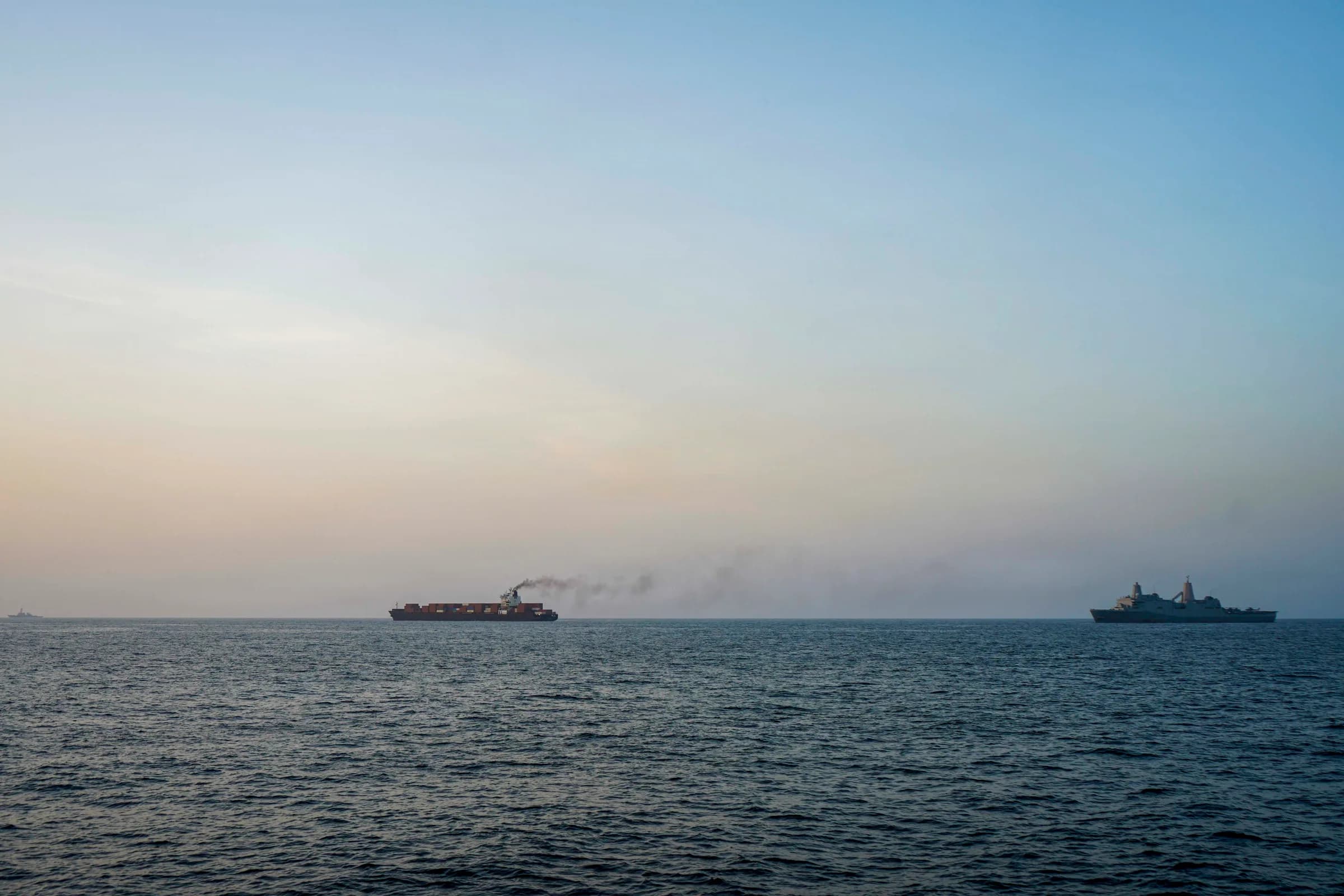
Three oil and chemical tankers were struck by projectiles as they left the Strait of Hormuz on Friday and Saturday, 20 and 21 November 2026, in the sharpest attack on Gulf shipping since the war between the United States and Iran began in late February. No crew members were reported killed or injured in the three strikes, and the waterway remained open, but the attacks pushed oil flows through the strait lower and raised the risk of a wider confrontation at sea.
The first vessel hit was the Captain Leon, a Marshall Islands-flagged chemical and oil tanker. It was struck on the bow at about 3 p.m. UTC on Friday, 20 November, about eight nautical miles north of Khasab, Oman, and a fire broke out on board. All of its crew were reported safe, according to Marisks, a maritime risk management company that tracked the incidents.
Two more tankers were hit on Saturday morning. The Torkel, a Hong Kong-flagged crude oil tanker, was struck on the stern at about 5 a.m. UTC, about 11 nautical miles north of Khasab, and caught fire. Less than an hour later, the Arina, also Hong Kong-flagged, was struck in the engine room by a missile about 17 nautical miles east of Khasab. The United Kingdom Maritime Trade Operations centre, known as UKMTO, recorded both Saturday incidents in warnings to shipping and reported no casualties in either case.
Marisks said Iranian involvement in the three strikes was assessed as likely, but it did not confirm who fired the projectiles. The Iranian navy said separately that a tanker had caught fire after striking a naval mine east of the strait. That account could not be independently verified, and it was not clear whether the vessel it described was one of the three named tankers.
A blockade under strain
The attacks took place against a US naval blockade of Iranian ports that Washington first imposed in April and reimposed on 14 July, after a brief lifting in June. The blockade has cut Iranian crude exports close to a standstill, according to reports, and Tehran has threatened to break it.
Reports said more than 14 Iranian oil tankers had assembled near Kharg Island, Iran's main crude export terminal, in preparation for a possible convoy through the strait toward China. The Institute for the Study of War warned that an attempted breakout could trigger a wider war. Charlie Brown, a senior adviser to United Against Nuclear Iran, dismissed the reported convoy plan as propaganda, telling Fox News that the operation was farcical.
President Donald Trump addressed the reports directly in a Fox News interview that aired on Sunday, 22 November. Asked whether Iran would attempt to breach the blockade, he said: "I hope they do, they'll all be at the bottom of the sea like the rest of the navy." Trump also said he was inclined to order renewed military strikes against Iran after the New Year if Washington and Tehran failed to reach an agreement.
Oil flows slow as attacks mount
The shipping attacks are already changing traffic through the strait, which carries a large share of the world's traded oil and gas. Oil flows through Hormuz slowed to around 9.5 million barrels per day in the 10 days through 19 November, from an average of 12.2 million barrels per day in October, according to shipping analytics firm Kpler, cited by Reuters.
At least 22 attacks on shipping in the area had been reported in November as of Sunday, according to a CNN analysis of UKMTO data, making it the second-highest monthly figure since the war began. More than 30 attacks were recorded in October, the highest monthly total so far. Reuters reported on 23 November that Iran had also struck facilities in Bahrain and Kuwait, and that the Houthi movement in Yemen, which is aligned with Iran, claimed on Sunday that it had attacked a Saudi Arabian oil refinery.
Brent crude futures fell 28 cents on Monday, 23 November, to 92.29 dollars a barrel, as a selloff in financial markets outweighed the shipping disruption, Reuters reported.
What happens next
No side has announced a change of course. The US Maritime Administration's active advisory for the Persian Gulf, the Strait of Hormuz and the Gulf of Oman says risks to commercial shipping remain high, and UKMTO has advised vessels to transit with caution. The Joint Maritime Information Center rates the threat level in the strait as severe.
The next evidence will come from further UKMTO warnings and confirmation of the damage to the three tankers, including whether they can sail on and whether any oil leaked. Until then, the question is whether Iran orders the reported Kharg Island convoy to sail, and how the United States responds if it does.