Diplomats in Geneva agreed in the early hours of Saturday, 21 November, to spend two more years drafting rules for lethal autonomous weapons, after a week of UN talks ended without any commitment to binding limits. The 128 states party to the Convention on Certain Conventional Weapons agreed to "elaborate" an international instrument on the weapons by 2028, but left open whether that instrument will be legally binding or only voluntary.
A compromise reached after midnight
The Review Conference of the Convention on Certain Conventional Weapons, known as the CCW, ran from 16 to 20 November in Geneva and stretched past its scheduled close into the early hours of Saturday. Negotiators emerged from the conference room at about 4:30 a.m. to announce the compromise, according to NPR. The conference was chaired by Swiss Ambassador Julien Thöni.
Under the CCW, decisions require consensus, so any single state can block an agreement. The final text says states will launch the elaboration of an international instrument on lethal autonomous weapons systems over the next two years. The Swiss government confirmed the instrument is to be drawn up in 2027 and 2028, and that its legal form will be specified once negotiations conclude. Switzerland welcomed the mandate as a step forward after more than ten years of discussion.
Background: How the week unfolded
On the first day, Russia delayed proceedings by objecting to the meeting's agenda, NPR reported. The United States then proposed a five-year window to discuss nonbinding, optional guidelines for autonomous weapons. Seven countries — Austria, Belgium, Brazil, Ireland, Mexico, New Zealand and Panama — had proposed launching negotiations on a rulebook that could prevent or limit machines killing without human control. That effort fell short.
The United States, Russia and Israel were among the most powerful states that had already signalled reluctance to accept binding regulations before the talks began. Because the CCW decides by consensus, the outcome settled at the lowest position all 128 states could accept. The basis for the talks was a report by the CCW's Group of Governmental Experts, adopted by consensus in early September, which set out possible elements of one.
Why campaigners call the result a failure
The International Committee of the Red Cross, the guardian of the Geneva Conventions, had said before the talks that legally binding rules should be drafted within a year. That call was backed by UN Secretary-General António Guterres, who leaves office at the end of the year and had set a 2026 deadline for launching negotiations, and by Pope Leo.
After the compromise was announced, the ICRC said it regretted the outcome and renewed its appeal for a binding treaty. Other campaigners were blunter, calling the deal "a real disappointment" and a "nothing burger", NPR reported. Georgia Hinds, an ICRC legal adviser, said: "There is a fundamental ethical concern with having what are essentially these life-and-death decisions determined by programming, determined by an algorithm. That's not something that you can fix with better technology. That is a moral red line that we cannot cross."
Weapons that decide who lives and dies
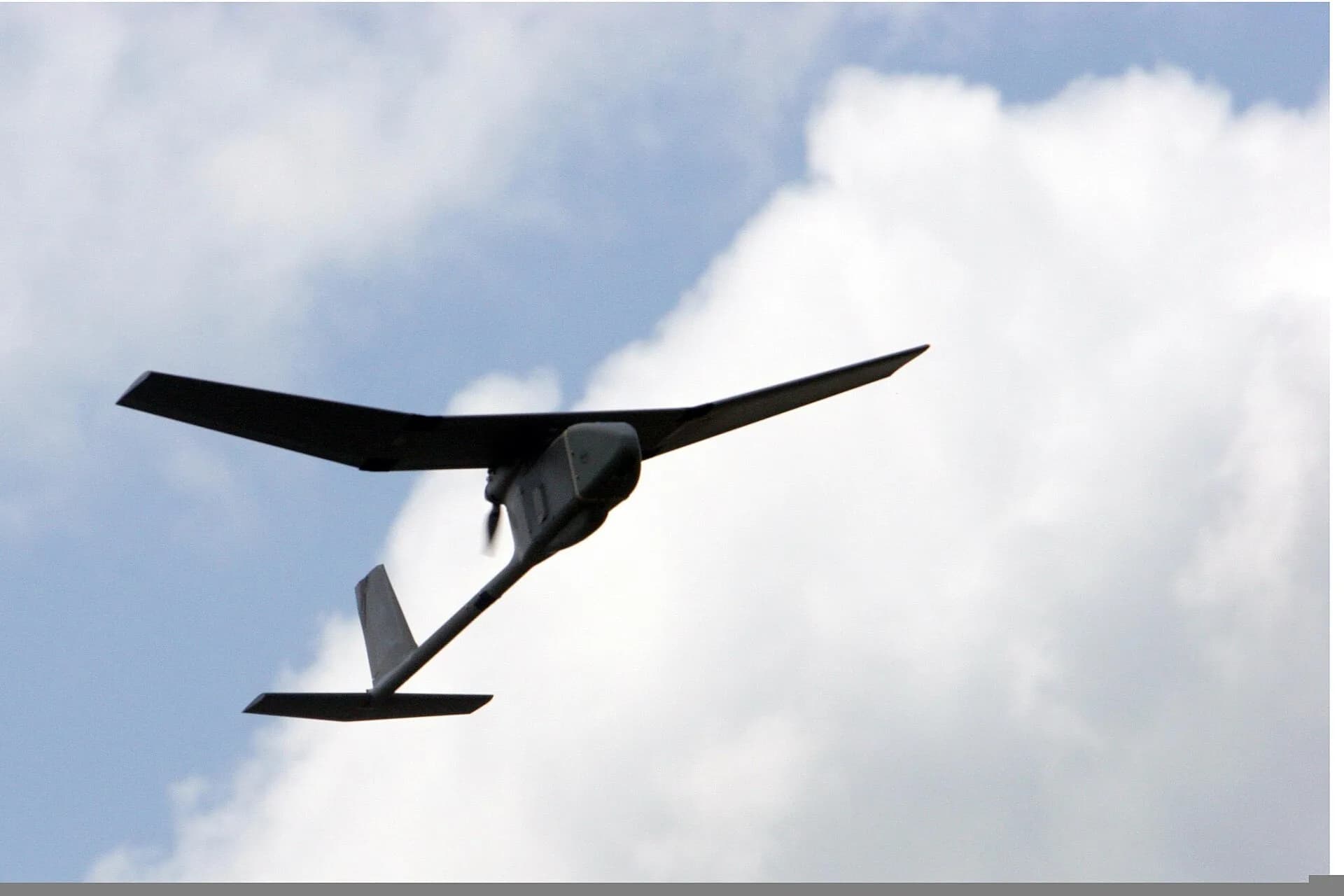
The talks were driven by warfare already under way. In Ukraine, Sudan and Gaza, civilians are being killed by semi-autonomous drones, NPR reported, and in Sudan this year 80 percent of civilian deaths were caused by drones, according to the United Nations. Humans remain in control of those systems, even if remotely, but humanitarian organisations fear artificial intelligence-assisted weapons are close to deciding to kill entirely on their own.
Anna Hehir, an expert in military AI governance at the Future of Life Institute, warned: "We're likely to see the systems proliferate. They're not like nuclear weapons in that they're inaccessible. There are autonomous weapons that are easy to purchase or even to create for all kinds of actors: individuals, nonstate actors, criminal groups."
The ICRC also raised a question of accountability. A commander remains responsible for making sure that the use of force is lawful, Hinds said, and a machine cannot be held accountable for a violation of the law. The rules of war assume humans do the killing, and it is unclear how they can be upheld if software makes the decision.
Two more years, no guarantee
For at least two years, weapons that can use artificial intelligence to make life-and-death decisions will remain unregulated, NPR reported. The talks on autonomous weapons have now run for 14 years, and Geneva shows the gap between the speed of the technology and the pace of diplomacy is still widening.
AFP reported that it remains possible, even likely, that there will be no treaty by the end of 2028. The two-year mandate keeps the question on the table, but the same consensus rule that produced this compromise will apply to whatever instrument emerges from it.