A mathematician at the artificial intelligence company Anthropic said on 20 November that he believes he has, working with the company's AI model Claude, discovered a proof of the Riemann hypothesis, the statement many mathematicians consider the most important open problem in the field. The claim, reported by the journal Nature, has set off excitement and scepticism in equal measure, because the proof has not been verified by anyone.
The announcement came from Levent Alpoge, a mathematician at the San Francisco company. "I believe I have, working with Claude, discovered a proof of the Riemann Hypothesis," Alpoge wrote, referring to Anthropic's large language model. He said the method also covered the generalised version of the hypothesis, a stronger statement that would settle many results mathematicians currently assume to be true.
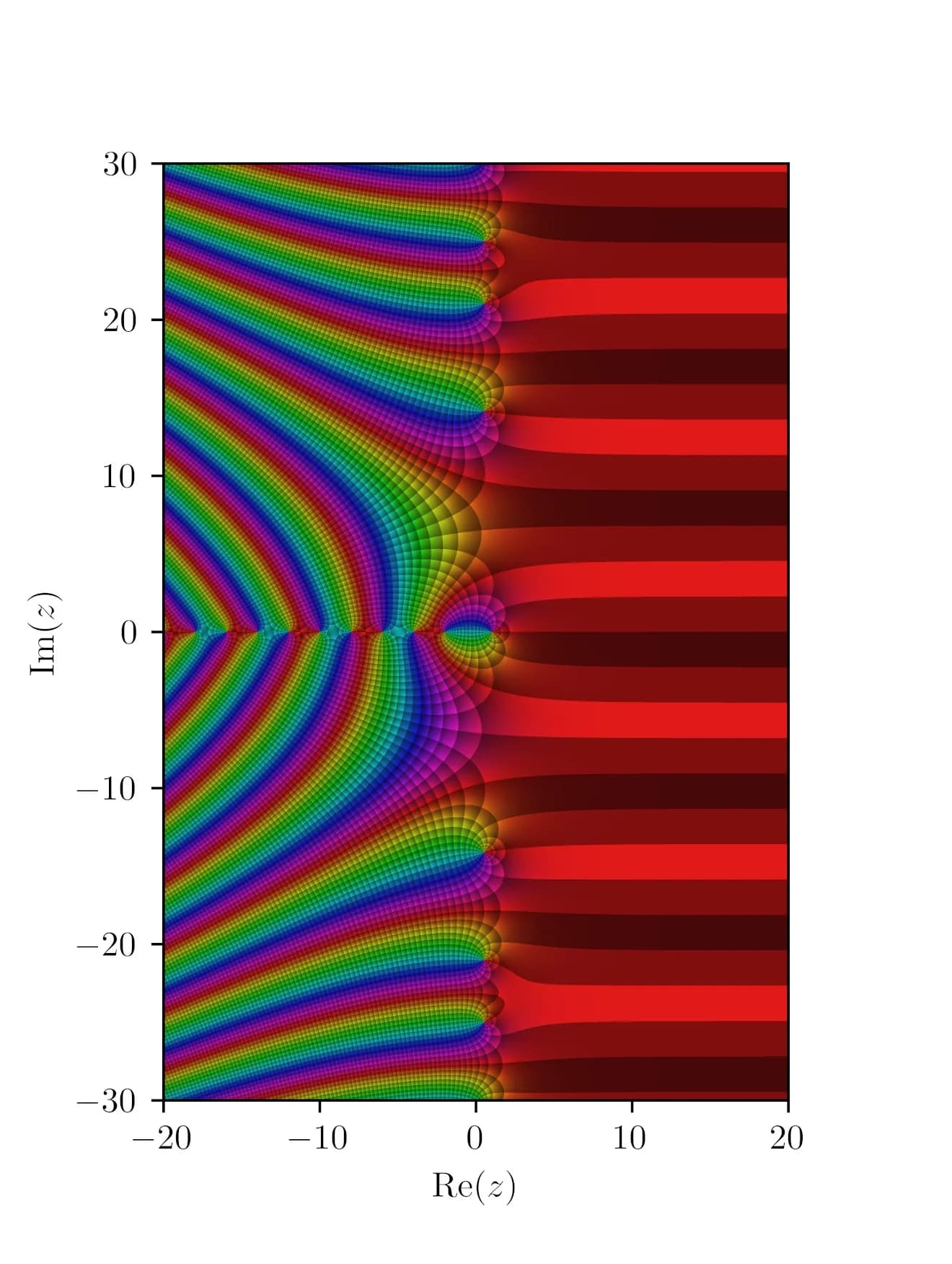
The Riemann hypothesis concerns the distribution of prime numbers, the numbers divisible only by one and themselves. In 1859, the German mathematician Bernhard Riemann linked the pattern of the primes to the zeroes of a function now called the Riemann zeta function. He conjectured that, apart from some obvious cases, all of the function's non-trivial zeroes lie on a single vertical line in the complex plane, the line where the real part equals one half.
What was actually released
Alpoge released a four-page document containing a sketch of the proof, together with a large formalisation of the argument in Lean, a computer system for checking mathematical proofs. The formal archive runs to millions of lines of code, which means no human reader can check the whole proof by reading it. Verification depends on the Lean system itself, and on other mathematicians re-running and examining the formalisation. As of 21 November, no human had checked the full proof, and the Clay Mathematics Institute still lists the problem as unsolved.
Reactions from mathematicians have been mixed. James Maynard, a Fields Medal winner and number theorist at the University of Oxford, told Nature: "If this fully checks out, it is clearly a historic milestone in mathematics." Andrew Granville, a number theorist at the University of Montreal, was less impressed by the way the claim was presented. He said Alpoge should have taken the time to prepare a clearer write-up before making the announcement, and he described the released document as garbled.
Granville also raised the timing. The announcement came just days after Anthropic's initial public offering, which initially valued the company at 1.5 trillion US dollars, before the valuation dropped on 19 November. Granville cited the downturn in the company's stock value as a reason for the timing of the release. Alpoge addressed that directly in his document, writing: "There is an obvious cynical view, to do with the timing, but it is false." Anthropic did not respond immediately to Nature's request for comment.
A second claim on the same day
Hours after Alpoge's announcement, a second claim appeared. Ravi Vakil, a mathematician at Stanford University, posted online a preprint claiming to prove the Riemann hypothesis, written by Alessandro Maria Masullo, a mathematician who received his PhD at Stanford in 2020. Vakil called his own announcement a hurried one, saying the hope had been to spend a year polishing the writing with Masullo's former supervisor, Brian Conrad, and to announce it only after running it by enough people. That preprint was written entirely by a human, with no AI involvement reported.
The two claims arriving on the same day underline how unsettled the situation is. Either proof, if confirmed, would be one of the great events in modern mathematics. Neither has been confirmed, and each will now face the slow work of checking by other mathematicians, a process that can take months or years for a proof of this size.
The Riemann hypothesis is one of the seven Millennium Prize Problems selected by the Clay Mathematics Institute at the turn of the twenty-first century. The institute offers a prize of one million US dollars for a solution, and reports note that a prize requires journal publication and a period of scrutiny, so a claim made on a website does not by itself settle the matter.
Why the claim matters beyond mathematics
The interest in Alpoge's announcement goes beyond the mathematics. For years, mathematicians said that AI could help with routine parts of research but could not handle a problem of this depth, because it requires sustained reasoning over a long argument. A verified proof produced with an AI model would change that assessment, and it would raise practical questions about how mathematical work is done, who gets credit for it, and how a proof too large for a human to read can be trusted at all. The next step is not another announcement but verification, and until that work is done, the Riemann hypothesis remains open.