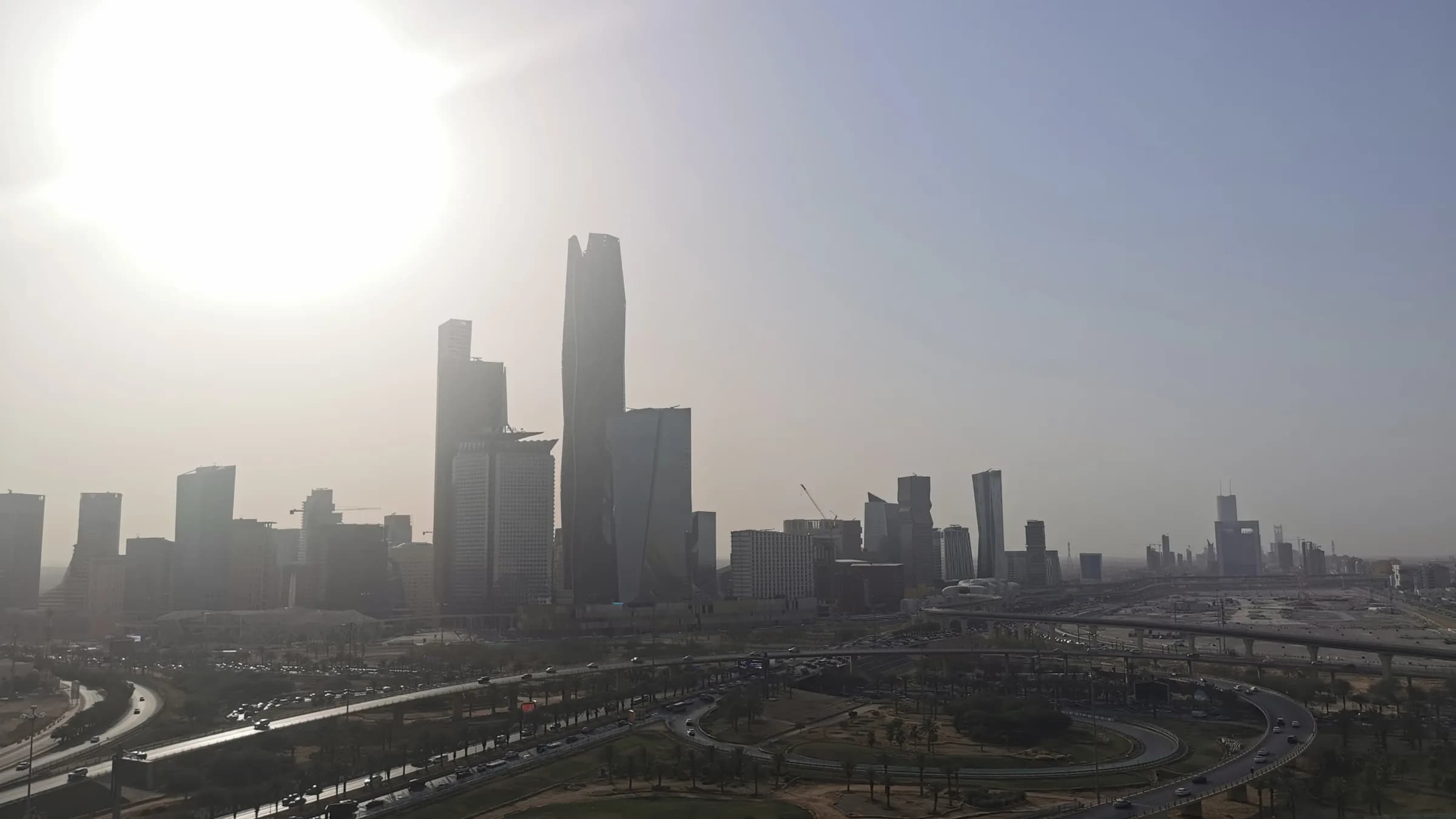
Yemen's Houthi fighters struck the tallest tower in Riyadh on Tuesday, 24 November, for the second time in less than a week. At least 11 people were wounded. It was the first time the attacks on the Saudi capital's financial district had caused casualties.
Saudi Arabia's Civil Defense reported the injuries and posted a photograph of the tower, the headquarters of the Saudi Public Investment Fund, showing damage about halfway up its facade. The picture resembled the impact left by the strike on the same tower on 19 November, which caused damage but no injuries. Reuters said it could not immediately determine when the photograph was taken, or how much further damage Tuesday's strike had caused.
The wounded were two Saudis, two Indians, three Nepalis and four Egyptians, the Civil Defense said. No deaths had been reported in the early accounts of the attack. Nine of the eleven were foreign nationals.
A Drone, the Coalition Says — and a Vow to Respond
Public Investment Fund Tower in the King Abdullah Financial District, and Reuters identified the tower in the Civil Defense photograph as the fund's headquarters. The Houthis claimed responsibility for the first strike on the tower, on 19 November, according to AFP. No claim had been reported for Tuesday's attack by the time of publication.
The Saudi-led coalition fighting the Houthis said later on Tuesday that the attack had been carried out with a drone, and vowed to respond "decisively to the deliberate targeting of civilians and civilian property". It said the incident was being handled by the competent authorities, but gave no further details — and did not name the building it said had been hit.
A Campaign Reaching Deeper into the Capital
The tower was not the first target in Riyadh. On 8 November, the Houthis hit a building belonging to Aramco, the state oil company. The group has been firing at Saudi airports, oil infrastructure and office buildings since July, when the US-Iran war reignited Yemen's frozen civil war.
The attacks are already biting. Reuters reported that most international flights to Riyadh have been cancelled, and Saudi Arabia has postponed or cancelled major international events, including football's AFC Asian Cup. A war fought mostly across the border is now disrupting daily life in the Saudi capital itself.
Inside Yemen, the fighting has displaced hundreds of thousands of people since July, according to Reuters. The Houthis control much of western Yemen, including the capital, Sanaa, and have seized large areas of territory from the Saudi-backed, internationally recognised government, which is based in Aden, forcing it into a major retreat this month. The Saudi-led coalition has answered with widespread air strikes.
A day before Tuesday's strike, the Houthis' communications ministry accused coalition aircraft of hitting telecom buildings, workers' housing and a mosque in the port province of Al-Hudaydah, killing 17 workers. That claim could not be independently verified. The two episodes show the fighting spilling further from the front lines, on both sides of the border.