South Korean Education Minister Choi Kyo-jin resigned on Sunday, taking responsibility for confusion caused by last-minute measures to prevent AI-assisted cheating in the country's high-stakes college entrance examination, held last week. President Lee Jae Myung accepted the resignation within an hour and ordered a comprehensive review of national exam management and related laws.
Choi said in a statement released through the Ministry of Education that the exam had finished without major incident, but that he could not escape criticism for failing to prepare in advance. "Now that the CSAT is over, I keenly feel responsible and am offering my resignation," he said. The presidential office said the choice of a new education minister would follow due procedure, and it instructed Prime Minister Han Seong-sook to take charge of follow-up measures for the exam.
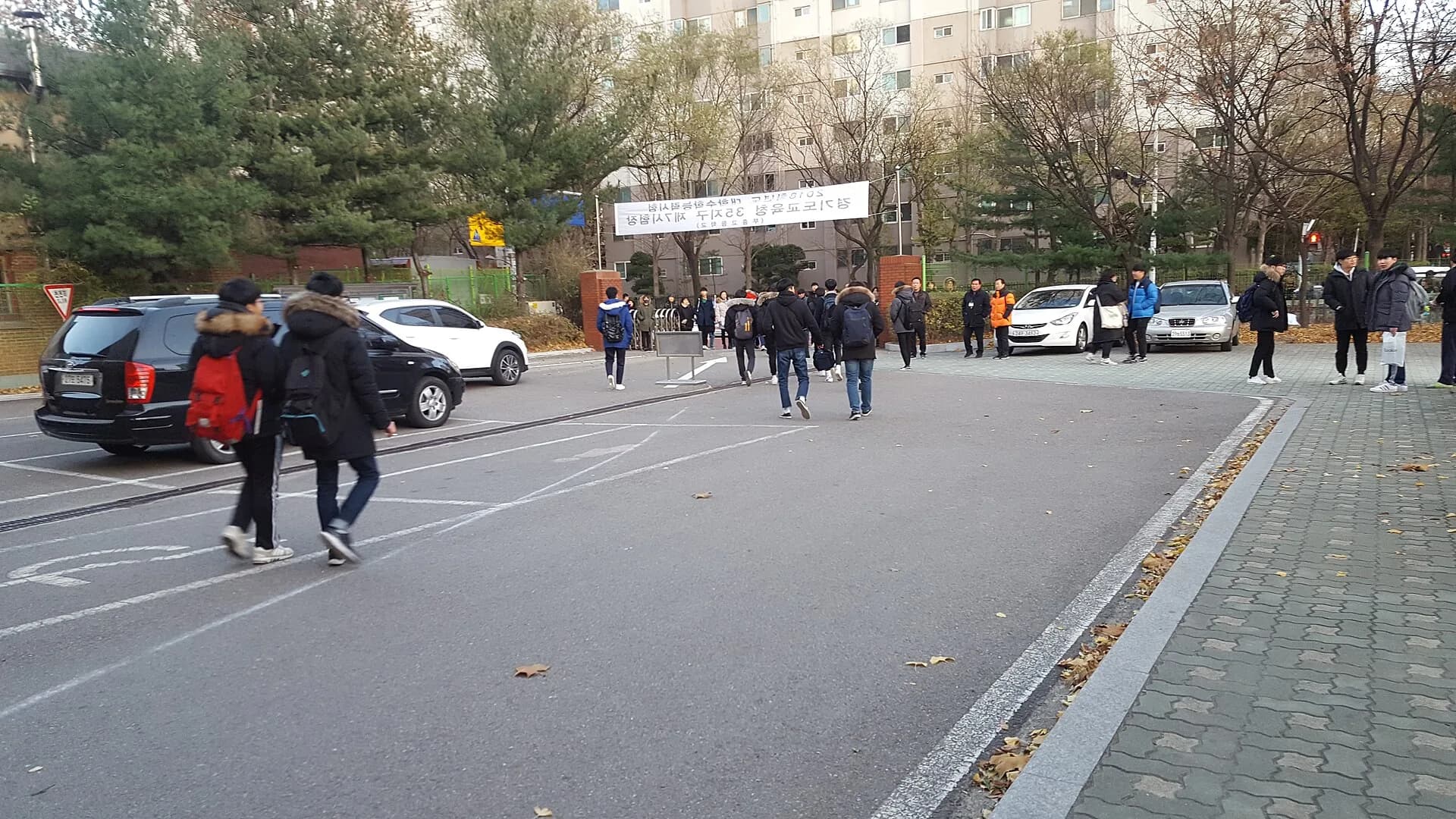
The College Scholastic Ability Test, known as the CSAT or Suneung, is held once a year and shapes university admission and careers for hundreds of thousands of young South Koreans. This year's test took place on Thursday 19 November at 1,312 test sites, with about 550,000 candidates.
A confession that set off the crisis
The crisis began with a confession in a different exam. On 15 November, Han Won-seok, the top scorer in this year's certified tax accountant examination, admitted that he had cheated using a miniature camera, a smartphone and generative AI. He photographed questions with the camera, sent the images to generative AI, and read the answers on his phone during both rounds of the exam, held in April and July 2026. His passing certificate was invalidated and he was barred from the qualification test for five years.
With the CSAT only four days away, the Education Ministry rushed out a series of new safeguards that changed repeatedly in the days before the exam. The ministry had initially focused on smart glasses. After the tax exam confession, it added measures that included pencil-only rules in some rooms, stickers covering buttons on clothing to block pinhole cameras, and emergency phone alerts sent nationwide during the test. Students, parents and school administrators struggled to follow rules that kept changing, and criticism grew that the response had come too late.
Choi's standing had already been damaged at a parliamentary hearing on 16 November, three days before the exam. Asked whether he could be confident of catching all AI-assisted cheating, he replied: "I don't think that I can. Because of my age." The remark drew sharp criticism.
What the exam found
The ministry said on Friday that 111 suspected cases of cheating with electronic devices had been detected during the exam. Of those, 54 were traced to the emergency alerts, 52 involved possession of devices or Wi-Fi signals, and five involved actual use of smart glasses, miniature cameras or smartphones. Final disciplinary action for the 111 cases is to be decided through the ministry's cheating review committee before CSAT results are announced on 11 December.
President Lee wrote on X shortly after Choi announced his resignation that concerns over cheating that exploits AI were spreading beyond the CSAT to essay-based admission exams and school tests. "The fairness of exams is a principle that can never be compromised," he wrote.
The episode has exposed a gap between the tools available to cheaters and the tools available to exam authorities. A miniature camera and a phone connected to generative AI can fit inside ordinary clothing, and the answers can arrive in seconds. The ministry's response relied on physical checks, stickers, pencils and phone alerts, which are visible and disruptive but cannot reliably detect a device that is already hidden.
A death on exam day
On the day of the exam, Lee Jin-woo, a top scorer in the Legal Education Eligibility Test who had been accused of using AI to cheat, was found dead at a motel in Seoul. Police are investigating his death. The circumstances have not been established, and no connection between the accusation and his death has been stated by the authorities.
For the government, the resignation closes one part of the episode and opens another. The comprehensive review ordered by Lee will cover national exam management and the laws around it, and the ministry must decide how to run next year's exam in a way that students can understand in advance. The CSAT matters so much in South Korea that a change of rules in the final days before the test is felt by families across the country, and the confusion this year is now a matter of public record. Whether the review produces rules that hold up against the next generation of cheating tools will be tested in a year's time.