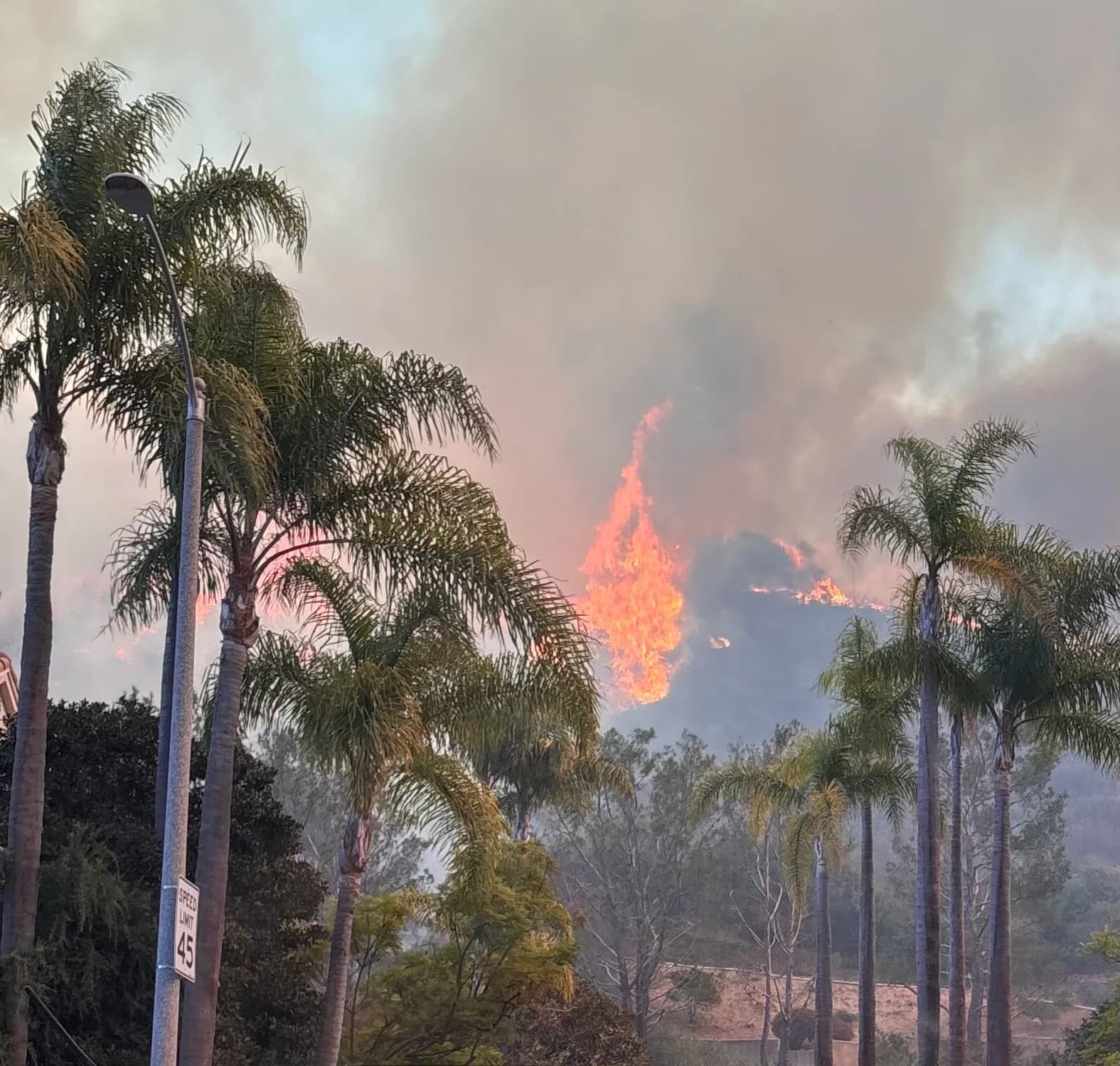
A federal jury in Los Angeles found Jonathan Rinderknecht, 30, guilty on 20 November 2026 of two federal counts linked to the fire that became the Palisades Fire. The jury convicted him of destruction of property by means of fire and arson affecting property used in interstate commerce. Prosecutors said Rinderknecht lit the fire on 1 January 2025. The fire burned underground for six days and surfaced on 7 January 2025 in high winds.
The United States Department of Justice said the Palisades Fire killed 12 people, destroyed 6,837 structures and caused an estimated 25 billion dollars in damage. It described the fire as the most destructive wildfire in the history of Los Angeles. Rinderknecht had pleaded not guilty.
The fire that became the Palisades Fire
Investigators determined that the Palisades Fire was a holdover fire. It began as the Lachman Fire early on 1 January 2025 and continued to burn below ground. On 7 January, heavy winds brought the fire to the surface and spread it above ground through Pacific Palisades.
The fire then moved through neighbourhoods in Los Angeles and Malibu. The Department of Justice said it caused widespread damage across Pacific Palisades. Rinderknecht was a former Los Angeles resident at the time of the fire. He has been in federal custody since October 2025.
The case centred on the link between the small fire on 1 January and the larger fire six days later. Fire investigators testified about the underground burning that kept the Lachman Fire alive and how they traced the Palisades Fire to the earlier ignition.
Evidence presented at the retrial
Prosecutors presented a case based on location data, photographs, camera images and expert testimony. They showed photographs of Rinderknecht's car parked at the base of a trail that led to the area where the fire started. They also presented cellphone tower data that pointed to his movement on the hill.
Fire detection camera images showed the time window in which the fire ignited. Experts told the jury that they had eliminated other sources of ignition that night, including fireworks. Prosecutors also relied on testimony from Uber passengers and on text messages Rinderknecht sent to his girlfriend.
Assistant United States Attorney Mark Williams told the jury that Rinderknecht was angry in the hours before the fire. Prosecutors said Rinderknecht called 911 more than a dozen times after the fire began. They said he also asked ChatGPT whether a person was at fault if a fire was lit because of cigarettes. Prosecutors presented that question as part of an alibi they said Rinderknecht tried to create.
The defence case and the first trial
The defence disputed the government's account of where the fire started. Steve Haney, Rinderknecht's attorney, said the fire scene could have been compromised because the area was publicly accessible until the Palisades Fire started on 7 January. The defence called a retired fire investigator for the United States Forest Service who argued that the fire began in a different area.
Haney also pointed to gaps in the cellphone data and to a neighbour who said he saw teenagers running away from the trailhead. The defence offered fireworks as another explanation. Several witnesses said they heard a loud bang from the hill. Prosecutors said camera images that evening showed no fireworks above the hill.
The first trial ended in a mistrial in June 2026. That jury deadlocked 10 to 2 in favour of acquittal after a two-week trial. Prosecutors then filed a new indictment with two charges. They dropped a third charge of timber set afire. The retrial began with jury selection on 2 November 2026. The jury reached its verdict on the third day of deliberations.
Sentencing and next steps
United States District Judge Anne Hwang scheduled sentencing for 17 March 2027. Rinderknecht faces a mandatory minimum sentence of five years in federal prison and a statutory maximum of 40 years. Each count carries a mandatory minimum of five years and a maximum of 20 years, according to the Associated Press.
First Assistant United States Attorney Bill Essayli said the verdict delivered a measure of justice for the families who lost loved ones and for the thousands whose lives were upended. Haney said the defence was disappointed in the verdict and respected the jury process. He said the defence would review all options on appeal at the right time.
Juror No. 3, who gave only his first name, Cameron, said he was the only juror who initially favoured acquittal. He said he changed his view after hearing the evidence in full, and that Rinderknecht's own testimony was the strongest evidence pointing to a guilty verdict. Sentencing is the next formal step in the case.