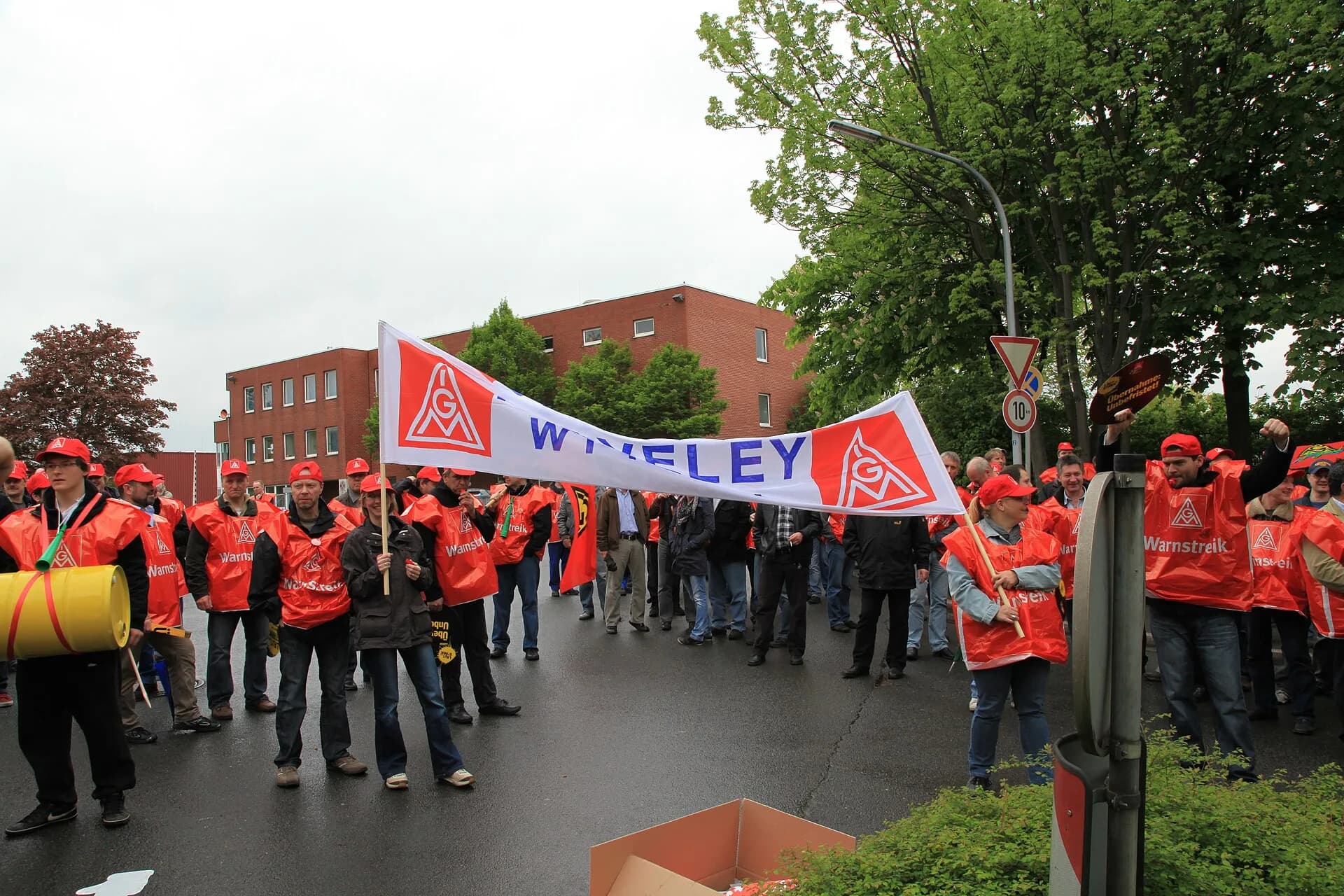
Germany's IG Metall union has called 24-hour warning strikes in the metal and electrical industries, the first full-day stoppages in the sector in eight years. More than 150,000 workers at about 100 companies stopped work on Friday 20 November, and the union called a second round on Monday 23 November, with 23,000 workers at 19 northern companies taking part, including staff at Mercedes-Benz, Meyer Werft and Siemens Gamesa.
The largest stoppages in eight years
The strikes are warning strikes, a standard step in German collective bargaining, but their scale sets them apart. The first round on 20 November brought more than 150,000 workers out at about 100 companies, and the second round on 23 November covered 19 companies in northern Germany.
The companies affected include some of the best-known names in German industry. Mercedes-Benz workers joined the action, along with staff at the Meyer Werft shipyard and at Siemens Gamesa, the wind turbine maker. The spread of the strikes across carmaking, shipbuilding and energy shows how wide the dispute runs.
What each side is asking for
IG Metall is demanding a 5 per cent pay rise over 12 months for 3.7 million metal and electrical workers, along with guarantees on jobs and work sites. The demand covers the whole metal and electrical sector, and it is the central dispute in Germany's largest wage round.
Employers have offered far less. Their offer is a 1 per cent one-off payment in July 2027, followed by a 1.3 per cent rise from July 2028. The gap between the two sides is wide, and the strikes are the union's way of showing that its members are prepared to act to close it.
The timing matters for both sides. The union wants a settlement that protects pay and jobs in an industry facing deep cuts, while employers say they cannot afford the rise the union is asking for. Neither side has moved far enough for talks to reach a deal.
Volkswagen faces crunch talks
Volkswagen opens crunch talks on Tuesday 24 November, seeking a two-year pay freeze. The company is asking its workers to accept no rise at all for two years, at a moment when it has just posted its biggest operating loss in more than a decade.
The scale of Volkswagen's problems frames the whole dispute. A two-year pay freeze would be a sharp break with the pay rises German car workers have received in past rounds, and it would set a marker for the rest of the industry if it is agreed.
The talks on 24 November come three days after the first round of strikes and one day after the second. The union will go into them with two rounds of strikes behind it, and the company will go into them after posting its biggest operating loss in more than a decade.
An industry under pressure
The German car industry is facing deep cuts, and the strike wave is the sharpest sign yet of the tension between workers and employers. The union's demand for job and site guarantees shows that its members are worried about more than pay: they want to know that their plants will stay open.
The dispute will be settled in the coming weeks, either at the negotiating table or through further strikes. The 5 per cent demand and the employers' offer of 1 per cent in 2027 and 1.3 per cent in 2028 leave a wide gap, and the strikes on 20 and 23 November were a warning that the union is prepared to widen the action if the gap does not close.
For Germany, the stakes go beyond the car industry. The metal and electrical sector employs 3.7 million people, and the outcome of this wage round will shape pay and jobs for a large part of the German workforce. A long dispute would weigh on an industry already facing deep cuts.