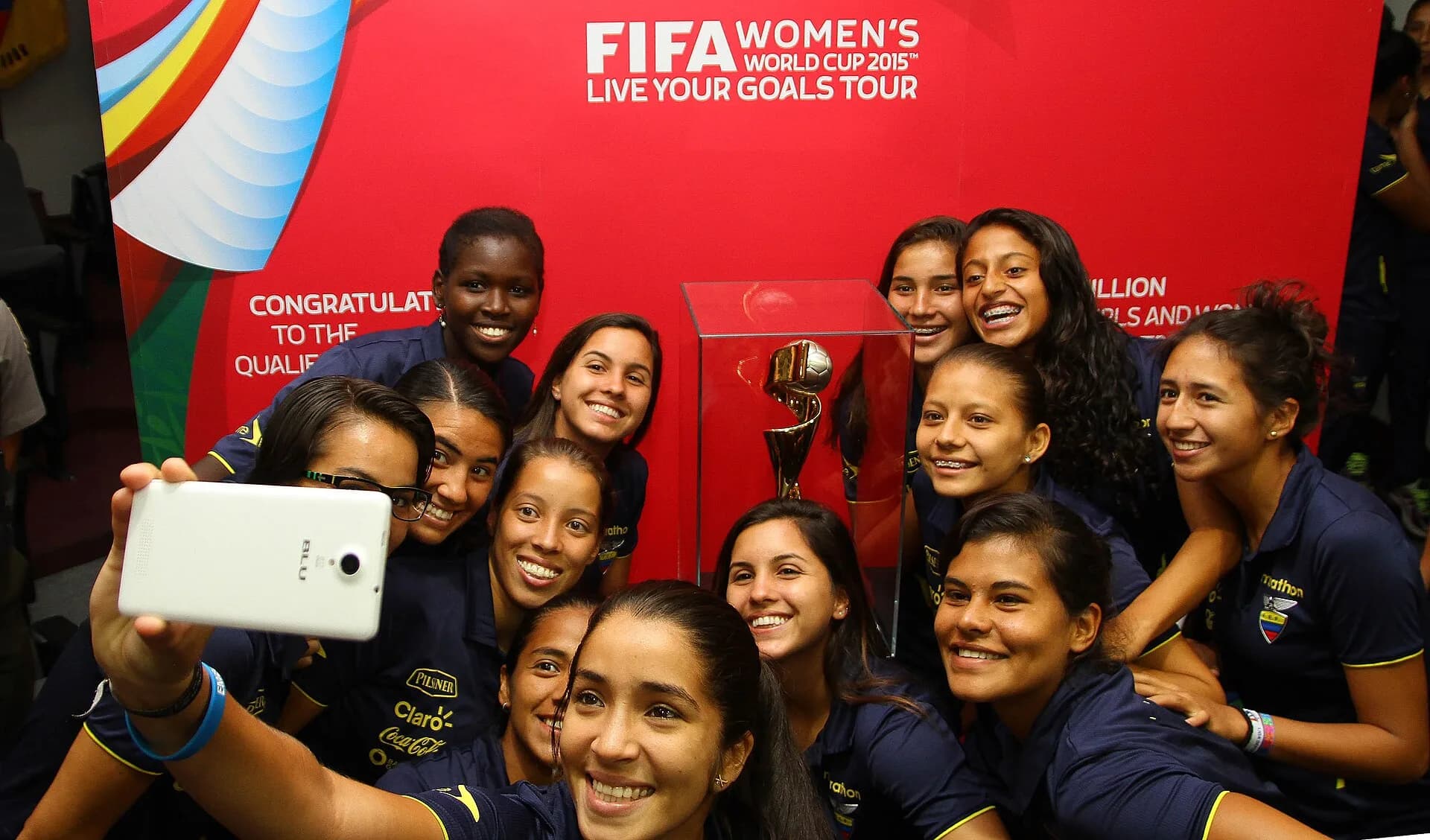
FIFA appointed the United States, Mexico, Costa Rica and Jamaica as hosts of the 2031 Women's World Cup at its Extraordinary Congress on Monday, 23 November, and confirmed England, Northern Ireland, Scotland and Wales as hosts of the 2035 edition. Both bids were unopposed and confirmed by acclamation at the virtual meeting of FIFA's member associations.
The 2031 tournament will be the first Women's World Cup with 48 teams and the first hosted across four member associations, FIFA said. It will also be the first edition staged by four nations, and the third Women's World Cup held in North America after the United States hosted in 1999 and 2003 and Canada in 2015.
The 2035 edition will be the first Women's World Cup staged in the United Kingdom. FIFA limited eligibility for the 2031 tournament to member associations from Africa and CONCACAF, and for the 2035 edition to associations from Africa and Europe. The bidding processes were initiated by the FIFA Council in March 2025.
Four Nations, One Tournament
The 2031 bid offers FIFA a choice of stadiums in 20 cities: 14 in the United States, four in Mexico, plus San José in Costa Rica and Kingston in Jamaica, according to FIFA's bid evaluation report. The final host cities have not been chosen, and U.S. Soccer said details on host cities, stadiums, schedules and ticketing will be announced later in coordination with FIFA.
The United States bid was confirmed as the only valid bid in April 2025. Mexico joined as a co-host in May 2025, and Costa Rica and Jamaica joined in October 2025. The bid also puts forward a larger portfolio of more than 30 candidate host cities and more than 45 stadiums for future consideration, giving FIFA flexibility in the final selection.
"Together with FIFA, we are committed to delivering a world-class tournament and will use this historic opportunity to accelerate the growth of women's football around the world," said U.S. Soccer President Cindy Parlow Cone.
A First for the United Kingdom
The 2035 bid joins England with Northern Ireland, Scotland and Wales, and offers a choice from 19 venues, including Wembley Stadium in London. It will be the first time the Women's World Cup is staged in the United Kingdom.
"As we said throughout our bid, we want this to be your Women's World Cup, a World Cup for everyone. Together, we will celebrate the power of women's football, inspire the next generation, and unite fans from every corner of the world," said Debbie Hewitt, chair of the English Football Association.
Forty-Eight Teams, 104 Matches
Both the 2031 and 2035 tournaments will feature 48 teams and 104 matches, the same expanded size as the men's World Cup in 2026. The 2035 edition will keep the same format, with 12 groups of four teams followed by a knockout round that begins with the last 32.
The expansion continues a growth path that saw the field increase from 24 teams to 32 at the 2023 edition. The 2031 tournament will be the 11th Women's World Cup. FIFA President Gianni Infantino said the aim was to make women's football "truly global" and to build the future together with all member associations.
From Brazil 2027 to a Bigger Stage
Before either tournament, the 10th Women's World Cup will be held in Brazil from 24 June to 25 July 2027, the first edition staged in South America. The appointments on Monday came almost exactly 35 years after the opening match of the inaugural Women's World Cup in 1991, which was contested by 12 teams.
Infantino said the 2031 and 2035 tournaments "should reach far beyond the pitch", pointing to more women players, coaches, referees and administrators. "Football belongs to everyone, everywhere in the world, and we have to create opportunities," he said.
What Comes Next
The immediate question is which cities will host matches. FIFA will decide the final venues, and the selection process is not expected to begin until the latter half of 2027. Until then, the 20 cities in the 2031 bid book and the 19 venues in the UK bid remain candidates rather than confirmed hosts.
For the four 2031 hosts, the appointment locks in a tournament that will be the largest in the women's game's history. For the United Kingdom, it sets up a first Women's World Cup on home soil, nine years after the men's tournament returns to North America in 2026.